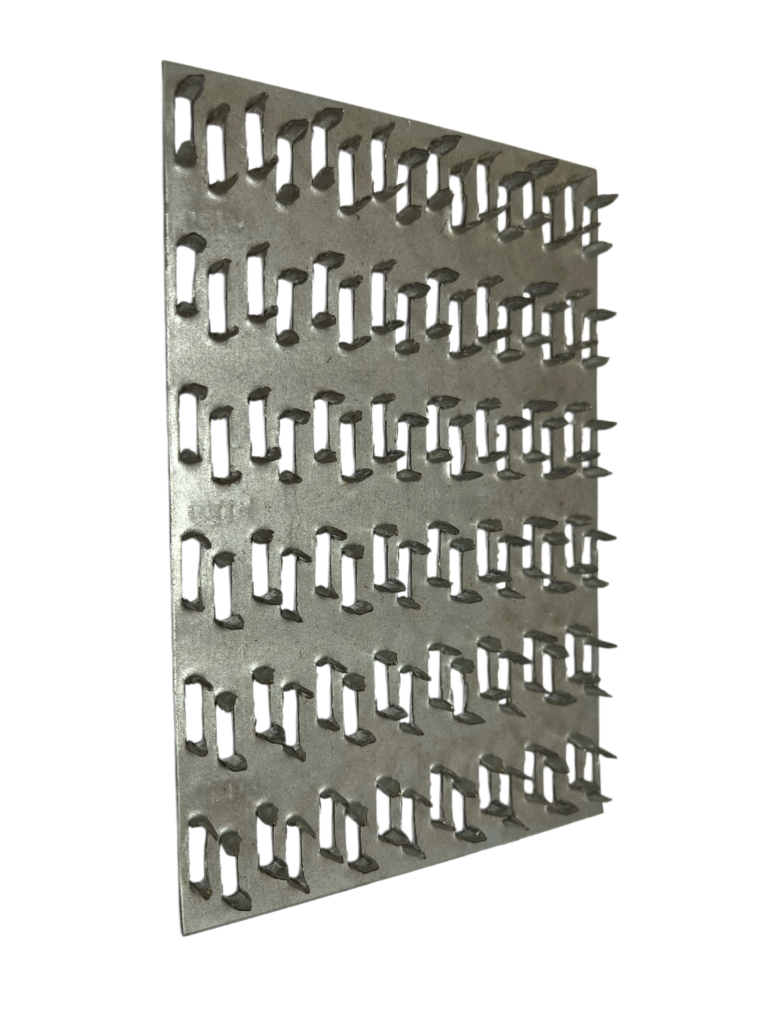
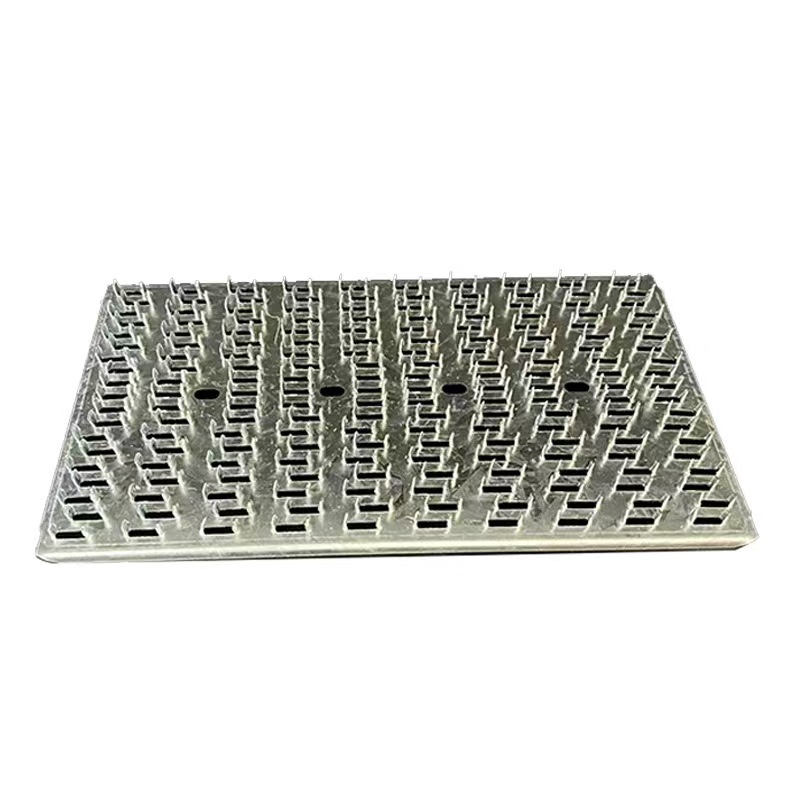
Truss nail plates (also known as tooth plates, wood structure connecting plates, or joist nail plates) are specialized connectors used for splicing and reinforcing wooden components in timber construction. With their high galvanized anti-corrosion coating and dense sharp-tooth design, they serve as core fasteners in light timber structures, log houses, and wood truss construction. Material The base material is typically high-quality low-carbon steel or high-strength galvanized steel sheet; some high-load models use Q235 steel. After stamping and heat treatment, they offer high strength and good toughness, with low risk of deformation or fracture. The surface is mainly treated with hot-dip galvanizing, with a coating thickness of no less than 80g/㎡, complying with building anti-corrosion standards. It can resist corrosion in outdoor humid, rainy, and saline-alkali environments, and does not rust easily during long-term use, meeting the long-term durability requirements of timber structures. Specifications The core parameters of truss nail plates are plate size, tooth height, and tooth density. Common plate sizes range from 50×100mm to 100×200mm, and can be customized according to different load-bearing needs. Tooth height is usually between 8mm-12mm; the teeth are triangular sharp teeth, integrally formed by stamping, evenly distributed and neatly arranged, with strong biting force. For different connection scenarios, there are also various styles such as single-sided teeth, double-sided teeth, and thickened plates, which can adapt to the splicing needs of different components like wooden beams, wood trusses, and wooden columns. Performance The dense sharp-tooth design can quickly bite into wood, forming a large-area咬合 contact, with stable pull-out and shear resistance. It effectively prevents wooden components from loosening or shifting due to long-term loads or temperature changes, significantly improving the overall stability of the timber structure. No additional nailing or welding is required during installation; it can be pressed into wooden components directly with hydraulic or manual tools, making construction convenient and efficient, and greatly shortening the assembly cycle of log houses and wood trusses. Application Scenarios Its application scenarios are highly focused on the light timber structure field, mainly used for truss splicing of log houses and wooden villas, as well as connection and reinforcement of beam-to-beam and beam-to-column joints. It is also widely used in the frame connection of wooden pallets, wooden component factories, garden timber structures, and outdoor log houses, and is an indispensable standardized connector in modern timber construction.